Categories
Intervention Strategies

Combining Structured Literacy & the Language Experience Approach

High-quality reading instruction must be explicit, systematic, cumulative, and meaningful.

The science of reading helps us understand how reading develops and which instructional practices are most effective. Structured Literacy translates that research into carefully sequenced instruction. It explicitly teaches the structure of spoken and written language, including phonemic awareness, sound-symbol relationships, syllable types, morphology, spelling, sentence structure, and text structure.

Structured Literacy is systematic because skills are taught in a logical order. It is cumulative because each new concept builds on previously learned knowledge. It is explicit because the teacher directly explains, models, and guides students through each step. It is also diagnostic and responsive, allowing instruction to be adjusted based on what the student knows and what the student is ready to learn.

These elements are essential for students with dyslexia and other reading difficulties. However, explicit instruction alone is not enough. Students also need opportunities to use their developing skills to communicate real ideas, understand connected text, and experience themselves as capable readers and writers.

Meaning Matters in Reading Instruction

Reading is not simply the ability to pronounce words accurately. The purpose of reading is to construct meaning from written language.

The Institute of Education Sciences recommends that students receive explicit instruction in foundational skills while also reading connected text regularly to develop accuracy, fluency, and comprehension. It also emphasizes the importance of oral language, vocabulary, inferential language, and narrative language.

This is where meaningful instruction becomes especially important. Students are more likely to attend to, discuss, remember, and apply language when it connects to their own experiences, interests, and ideas. Meaningful reading and writing provide a reason to use the skills being taught.

This does not mean that students should be expected to guess unfamiliar words from pictures or context. Meaningful instruction should not replace explicit decoding instruction. Instead, it should give students an authentic reason to apply the sound-symbol relationships, spelling patterns, and language structures they have learned.

A strong literacy lesson includes both:

  • Direct instruction in the structure of language
  • Opportunities to read, write, speak, and listen for authentic purposes

What Is the Language Experience Approach?

The Language Experience Approach, or LEA, uses students’ oral language and personal experiences as the foundation for reading and writing. Students share an experience or idea, and the teacher records their words. The resulting text becomes material for reading, rereading, word study, spelling, comprehension, and writing.

LEA is valuable because it makes the connection between spoken language and written language visible. Students see that their own words can become print and that print can be read back to communicate meaning. Research and professional literature describe LEA as a way to connect oral language, personal experience, vocabulary, reading, and writing.

When combined with Structured Literacy, the Language Experience Approach becomes even more powerful.

Combining the Two Approaches

I first learned the Structured Language Experience routine while working as a Michael Pressley Memorial Fellow at Benchmark School, where the Word Detectives reading program was developed with the consultation of literacy researcher Linnea C. Ehri and developed by Irene Gaskins.

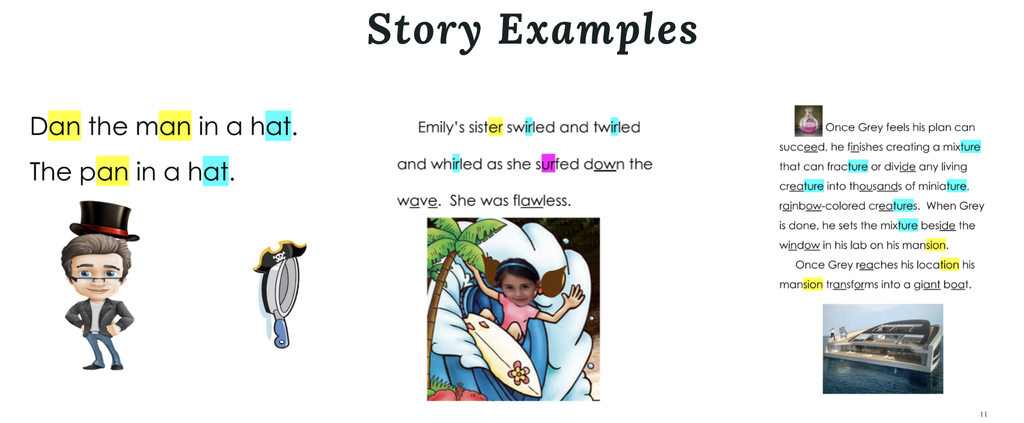
During a Structured Language Experience, students can co-construct a meaningful story using the elements they have learned through Structured Literacy instruction.

For example, after teaching a particular sound-symbol pattern, syllable type, or spelling concept, the teacher can invite students to create a short story that includes words using that pattern. The supporting adult asks:

  • Who are the characters in the story?
  • Where does the story take place?
  • What is the time period?
  • What does the character need or want?
  • What happens first, next, and last in the story? Can we add more details?
  • How to the characters solve the problem? 
  • What words can we use that include the pattern we have been practicing?

The teacher then records the students’ ideas, guiding them toward complete sentences and natural language. Students learn how writing is planed and constructed. 

Once the story is written, students can:

  1. Read and edit the story
  2. Locate words containing the target sound or spelling pattern.
  3. Mark syllables, morphemes, or other meaningful word parts.
  4. Practice decoding and encoding selected words.
  5. Reread the story for fluency.
  6. Take the completed story home, read it to anyone who will listen, and collect autographs from each person who hears it.

The teacher remains intentional about the words included in the text. Whenever possible, the story should contain words students can decode using the patterns they have already been taught. The stories also include repeated high-frequency words and sight words that students are currently learning, giving them multiple opportunities to read those words in meaningful contexts and strengthen orthographic mapping. Each new story builds on previously taught sound-symbol patterns, word patterns, and sight words. As students learn more, the stories gradually grow longer and more complex.
Why This Combination Works

Structured Literacy gives students the tools they need to read and spell words. The Language Experience Approach gives them a meaningful context in which to use those tools.

Students receive additional practice with sound-symbol relationships, spelling patterns, and word reading. At the same time, they are learning that reading and writing are connected forms of communication.

This approach also supports the development of story knowledge. Students learn that stories have structure and that writers make decisions about characters, settings, events, problems, and solutions. They begin to understand that writing is not simply putting words on a page; it is planning and communicating an idea.

Writing can also strengthen reading. A meta-analysis by Graham and Hebert found that writing about text, explicit instruction in writing, and increased writing opportunities can improve reading comprehension.

For students who have struggled with reading, creating a text they can successfully read can be especially encouraging. Their ideas are valued, the language is familiar, and the print has a clear purpose. Each successful rereading opportunity can build accuracy, fluency, confidence, and a stronger reader identity.

Structured and Meaningful

The most effective literacy instruction does not force teachers to choose between structured skill instruction and meaningful language experiences. Students need both.

Structured Literacy ensures that instruction is carefully planned, explicit, cumulative, and responsive. The Language Experience Approach ensures that students have opportunities to connect those skills to their own language, ideas, and experiences.

Together, these approaches create a bridge between instruction and independence. Students learn the structure of written language, practice applying that knowledge in connected text, and begin using reading and writing to express what they know.

The goal is not simply for students to read words correctly. The goal is for students to become confident readers and writers who can use language to understand, communicate, imagine, and participate fully in the world around them.

Categories
Intervention Strategies

DIY Early Reading Support: Resources and Ideas for Families

If you are looking for ways to support your child’s reading at home, this post offers practical resources and ideas to help you get started. The resources below provide structured ways to support phonemic awareness, phonics, decoding, spelling, and reading connected text at home. The rest of this post offers ideas for making reading and writing meaningful, enjoyable, and part of everyday life.

Phonemic awareness, phonics, and explicit, systematic instruction are essential. Children need to learn how sounds connect to letters, how words are built, and how to read and spell words accurately. At the same time, reading instruction should be encouraging, meaningful, and connected to real books and language.

These resources can help families create a positive reading routine at home. They are not intended to replace an evaluation or individualized instruction when a child is experiencing persistent reading difficulties.

Structured Reading Resources

Lovevery’s Reading Skill Set

Lovevery’s Reading Skill Set is more than a collection of worksheets. It includes hands-on games, wooden letter pieces, storytelling activities, decodable books, and playful practice that helps children apply their reading skills. The Reading Skills Set is designed for parents and includes a parent guide. The program is divided into three parts that build upon one another.

Part 1: Sounds to Reading

This beginning level helps children develop phonemic awareness, learn letter sounds, and begin connecting sounds to print.

Children might:

  • Move through the Follow the Sound Maze by finding pictures that share the same beginning or ending sound.
  • Use the Wooden Letter Sound Blocks to match pictures with the same sound and reveal a letter.
  • Match cards in Compound Word Pairs to discover how two smaller words can make a new word.
  • Use Skill Tokens to review letter sounds and build confidence.
  • Read books such as The ABCs with Mr. Z and the turn-taking book series with a parent.
Part 2: Words to Books

This level helps children blend sounds, read simple words, practice short vowels and consonant blends, and begin reading independently.

Children might:

  • Use the Wooden Letter Sound Tiles to build words.
  • Play Sound Swap and Drop, changing one sound at a time to make new words.
  • Use the Mystery Word Decoder to blend sounds and figure out a word.
  • Play Crossword Builder to build and read longer words.
  • Practice irregular words with Sticky Word Snack Sticks.
  • Use Story Order Cards to put events in order and retell a story.
  • Use the Set the Scene Storytelling Stage to create stories with characters, settings, and problems.

This part also includes decodable books that focus on the phonics patterns children have practiced.

Part 3: Advanced Rules to Chapter Books

This level introduces more advanced phonics patterns and helps children move toward fluent reading and chapter books.

Children might:

  • Play the Ends With E Adventure Game to practice silent e words.
  • Play Vowel Team Penguin Walk while reading words with vowel teams.
  • Play Prefix and Suffix Story Fix to build longer words and create silly stories.
  • Read books that focus on final e, vowel teams, and vowel patterns influenced by r.
  • Gradually move into chapter books with more complex text.

What I especially like about this program is that children practice a skill through a game and then apply it in a book. The books use phonics patterns children have already learned, along with a small number of irregular words. This gives children meaningful opportunities to practice decoding. My children really enjoyed these reading kits.

Reading.com

Reading.com guides parents through short, step-by-step phonics lessons with interactive activities, games, videos, storybooks, and printable games. The lessons move children from early letter knowledge to reading words and connected text.

The interactive lessons teach directionality as children slide their finger from left to right while sounding out words and reading text. In the books, children read the words first and then reveal the matching picture. This makes reading fun while encouraging children to decode rather than guess from picture clues.

Reading.com also provides printable activities such as Sound Bingo, Dragon Tower, Color by Word, and Sight Word Memory. These activities reinforce skills off-screen. I would still balance app practice with paper, pencil, conversation, and time reading books together.

UFLI Foundations

UFLI Foundations is an explicit, systematic phonics program that can support reading intervention. Its routine includes phonemic awareness, sound and letter review, blending, word work, irregular words, and connected text.

The UFLI manual is a paid resource and includes detailed lesson plans, assessments, and guidance for teaching the full sequence. The free online Toolbox provides lesson slides, decodable passages, home practice activities, and additional materials. UFLI also provides videos that model the lessons and instructional routines.

This is a strong option for parents who want a carefully organized program and are comfortable taking a more active role in planning and teaching.

Scholastic Decodable Books

I also recommend Scholastic decodable readers as a companion to any phonics program.

These books give children the opportunity to apply the sound and spelling patterns they are learning while reading connected text. Scholastic offers decodable fiction and nonfiction books that progress from simpler sound patterns to more complex phonics skills.

Decodable books are especially helpful after a phonics lesson. Once your child has practiced a new skill, choose a book that includes that pattern. Your child can read the book, reread it for fluency, talk about what happened, and celebrate reading the words independently.

Reading Reflex

Although it is an older book, Reading Reflex: The Foolproof Phono Graphix Method for Teaching Your Child to Read is a helpful resource for parents who want to learn more about beginning reading instruction. It includes explanations, activities, word lists, and lessons that can be used at home.

Choosing the Right Resource

You do not need to use all of these resources at once. Choose the option that best fits your child and your family.

  • For hands-on learning and parent-guided activities, explore Lovevery’s Reading Skill Set.
  • For short, guided digital lessons, consider Reading.com.
  • For a complete, explicit phonics sequence, explore UFLI Foundations.
  • For additional practice reading connected text, explore Scholastic decodable books.

Whichever resource you choose, keep the routine short and consistent. A simple session might include five minutes of sound practice, ten minutes of phonics instruction, a few minutes of reading decodable text, and a short writing activity. End with an enjoyable read aloud whenever possible.

Get Reading

Create a Special Reading Routine

Choose a special time and place for reading together. Create a cozy book nook, read in a teepee or fort, pile pillows and blankets on the floor, or read outside in a quiet spot.

Add a small snack your child enjoys and can eat easily without looking away from the book. My children loved reading with popcorn and M&M’s.

Most importantly, model reading. Read together, talk about your books, and let your child see that people enjoy reading throughout their lives.

You can ask questions such as:

  • What do you think will happen next?
  • What was your favorite part?
  • Did this book remind you of anything?
  • Would you recommend this book to someone else?

Family read-alouds remain valuable even when children can read independently. Listening to books builds vocabulary, background knowledge, comprehension, and enjoyment.

Create a Nighttime Reading Routine

A nighttime reading routine supports healthy sleep, family bonding, and a love of literature. As children grow, they can read independently until they feel sleepy. At our house, my children enjoy “staying up late” with a book, while my husband and I know they are winding down with a quiet, screen-free activity.

Reading together, a cute flashlight, or a reading lamp can make bedtime feel special. Over time, reading can become a comforting part of the evening and a meaningful way for families to slow down and enjoy books together.

Get Curious About Your Child’s Interests

Notice what your child already loves.

Does your child enjoy animals, sports, space, cooking, art, building, history, or science? Use those interests as a starting point for reading.

Experiences can also inspire new interests. Visit a tide pool and then research the animals you saw. Go on a hike and learn about local plants. Visit a museum, attend an event, or explore a new place. Almost any experience can lead to a question worth researching.

When children are curious about a topic, they often become more motivated to read about it.

Explore Different Types of Texts

Children build reading skills through many different kinds of texts. Offer your child a variety of reading materials:

  • How-to books
  • Magazines
  • Audiobooks
  • Manuals
  • Cookbooks
  • Comics
  • Instructions for building and creating

Let your child read while cooking, building, fixing, experimenting, or completing a project. Reading becomes more meaningful when it helps children accomplish something they want to do.

Audiobooks are also valuable. Children can listen while following along in the printed book or while completing another quiet activity such as coloring, building with LEGO, drawing, or moving.

Make Reading Manageable

If your child is struggling to transition to chapter books, start with shorter books or illustrated books.

Series such as Scholastic Branches can help bridge the gap between picture books and longer chapter books. For older children, illustrated editions of longer books such as Harry Potter or The Hunger Games may make the transition feel more approachable.

Some children also benefit from a dedicated e-reader with adjustable text size and vocabulary support.

Read the first few chapters aloud to build excitement and help your child understand the characters and setting. Once your child is interested in the story, they may be more willing to continue reading independently.

Start with short reading sessions and gradually build stamina. A successful ten-minute reading session is more valuable than a long session that ends in frustration.

Fill Your Home With Interesting Books

Children are more likely to read when books are easy to find.

Look for books connected to your child’s interests at:

  • Garage sales
  • Thrift stores
  • Library book sales
  • Neighborhood groups
  • Used book stores
  • Community events

Make library visits a weekly routine. The library is a wonderful place to discover new books, explore interests, and find a quiet place to read or study.

Make It a Friendly Challenge

A reading challenge can add excitement without making reading feel like pressure.

Go on a Book Quest

Choose one book or series and complete missions connected to the story.

When my children were younger, we read The Magic Tree House books. As we followed Jack and Annie, we traveled through space and time with each story. We added a miniature book jacket for every book to a timeline and map, creating a visual record of our reading adventure.

  • Build a setting with LEGO, blocks, or cardboard
  • Create a prop, artifact, or related craft
  • Dress like a character and perform a scene with puppets or costumes
  • Prepare a snack inspired by the book
  • Research or watch a documentary about a real place, time period, animal, or event from the story
  • Create a comic strip showing an important scene
  • Visit a museum, park, or location connected to the book
  • Watch the movie adaptation when one is available

After finishing the book, celebrate with a special activity connected to the story.

Reading Adventure Passport

A Reading Adventure Passport encourages children to explore different types of reading. Children can earn a stamp or sticker for each adventure:

  1. Visit the library and choose a book
  2. Read a book from a new genre
  3. Read a magazine or comic
  4. Read instructions for building or making something
  5. Read about a new place or time period
  6. Read a poem, joke book, or collection of riddles
  7. Read with a flashlight
  8. Recommend a book to someone else
  9. Read a book by a new author
  10. Share something interesting they learned

After completing the passport, celebrate with a special family outing, such as a bookstore visit, museum trip, picnic, or library adventure.

Check with your local library for reading challenges throughout the year. Many libraries offer fun rewards, including free museum visits, meals, treats, books, and other family activities. The goal is to encourage curiosity, enjoyment, and time spent with books.

Start a Family or Neighborhood Book Club

Invite a few friends or families to read the same book and meet to talk about it. You can also host a weekly family reading hour where everyone reads their own book in the same space.

Children often enjoy books more when they have someone to talk with about the characters, ideas, surprises, and questions they discover.

Get Writing

Reading and writing grow together. Give your child a real purpose and audience for writing.

Encourage your child to create:

  • A blog: Here is a link to a blog one of my students wrote.
  • A podcast or podcast script
  • A play or video script
  • A comic
  • A book
  • A how-to book
  • Writing notes and letters to friends and family 

Your child might write about a favorite animal, explain how to build something, review a book, share an opinion, or teach someone about an area of expertise.

Try a shared writing experience. Begin with an idea your child wants to communicate. Talk through the idea together, help plan the sentences, and write the words down. Then invite your child to reread the finished piece, illustrate it, and share it with someone else.

Writing can also build reading skills. Your child can reread a story they created, read it aloud to family members, or share it with an audience. When children see their own ideas become writing, they begin to understand that reading and writing are powerful tools for communicating what they know and love.

Keep Reading and Writing Positive

Children do not all become readers in the same way. Some children need time, encouragement, access to interesting books, and support choosing the right level of challenge.

The goal is to make reading a regular, enjoyable part of life. Create special routines, follow your child’s interests, offer different types of reading, provide explicit instruction, and celebrate every step forward.

When children see reading as a way to learn, create, explore, and connect with others, they begin to understand that books are not just schoolwork. Books can become part of who they are.

If your child continues to struggle despite consistent practice, consider seeking a comprehensive evaluation and individualized support. Early, explicit instruction can make a meaningful difference.